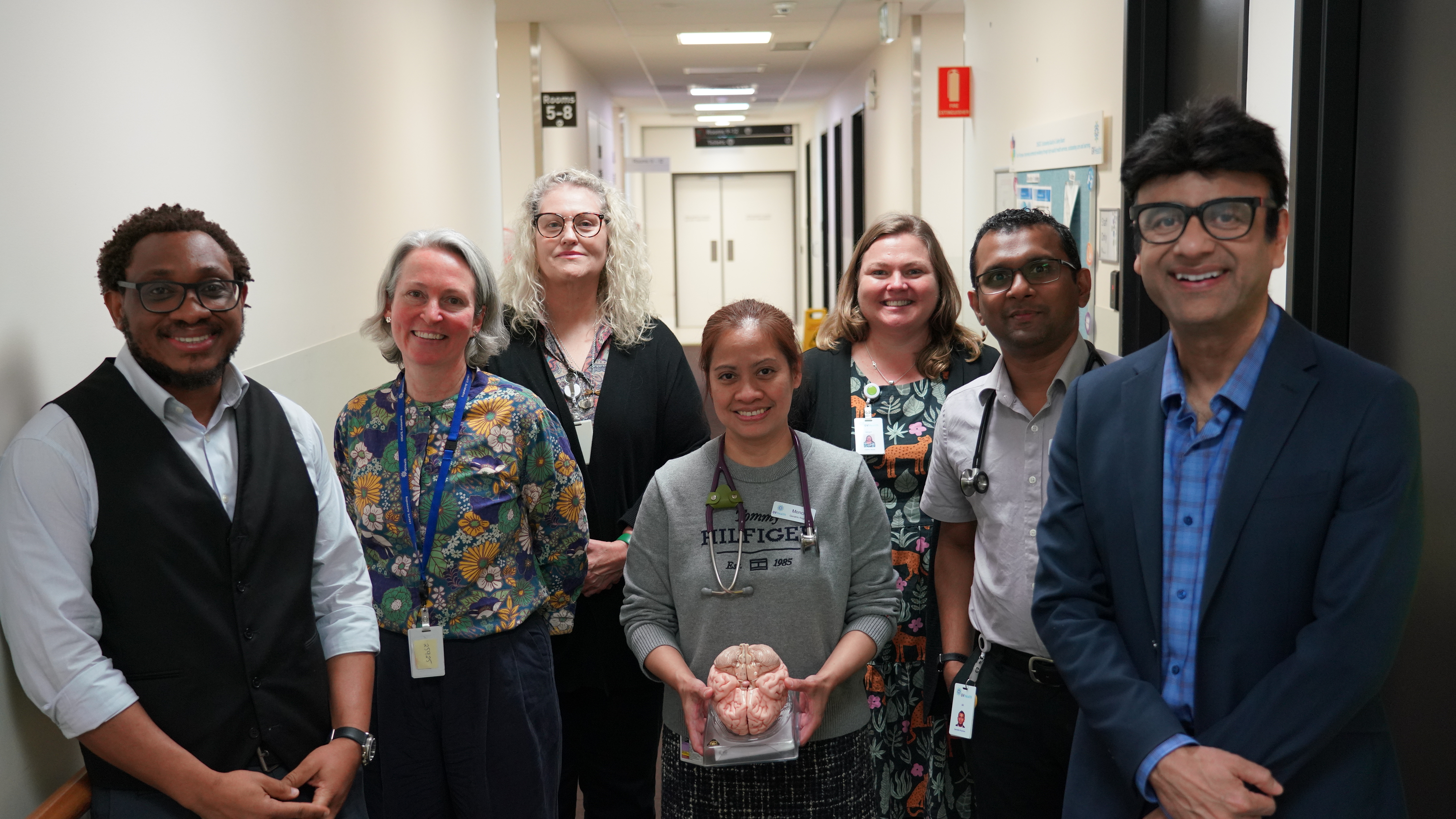
GV Health‘s Dementia Support Group: ‘It’s Time to Talk’
GV Health urges the community to talk openly about dementia, Australia’s leading cause of death.
According to the Australian Bureau of Statistics, dementia has overtaken heart disease as the leading cause of death across the country, responsible for nearly 1 in 10 deaths.
GV Health’s Cognitive Dementia and Memory Service Coordinator, Jillian Hawker, said early diagnosis changes everything for a family.
“It gives the person diagnosed and their family time to plan, and to set out what the person’s wishes are,” Jillian said.
Dementia Australia reports that around two in three people living with dementia are thought to be living in the community rather than residential care, which means most families are navigating a diagnosis largely on their own, without a hospital bed or facility around them. It’s part of why GV Health runs a support group alongside its clinical service.
“The support group is for both the person diagnosed with dementia and the carer or carers. Everyone can come along, and it’s just a good opportunity for people to be able to socialise and mix with people who are in the same situation as they find themselves in,” Jillian said.
GV Health’s Consultant Physician and Geriatrician, Dr Femi Afolayan, said community connection is one of the most under-recognised tools in dementia management, sitting alongside medication rather than replacing it.
“When we make a diagnosis, we often probe into both pharmacologic measures and non-pharmacologic measures,” Femi said.
“We don’t just say, ‘you have the diagnosis, take this tablet, that’s it’ — It’s about getting the community involved in their care.”
Nationally, an estimated 1.7 million people are involved in caring for someone living with dementia. Shepparton’s multicultural population adds another layer to that community approach.
Femi said cultural attitudes toward dementia, rather than access to services, are often the bigger barrier.
“In some cultures, dementia is maybe seen as aging rather than dementia, or it’s seen as just an old people’s problem, so they don’t see the reason to escalate the care,” Femi said.
“We also have testing measures that are specific for different ethnic backgrounds and cultures, so it’s not the same one yardstick of tests for everyone.”
Regional and rural areas carry a disproportionate share of the national dementia burden. Research shows rural Australians are up to five times more likely to develop dementia than people living in the metropolitan areas.
“We can’t take over the community; there’s not enough of us here at the hospital for that, but we can let people know there’s a service where they can come outside the confines of a consult room, just to talk freely with people in the same situation,” Femi said.
Jillian added that one of the most persistent misconceptions is that dementia is simply memory loss, when it affects far more than memory alone.
Femi has a simple way of explaining that to patients and families.
“Have you got apples or have you got fruits? An apple is like Alzheimer’s; it’s just one type of fruit, whereas dementia is fruits — an umbrella term.”
GV Health’s Cognitive Dementia and Memory Service (CDAMS) is a multidisciplinary specialist diagnostic service that aims to assist people experiencing changes to their memory and thinking.
CDAMS is available to all people in the community, via referral.
Free Support Group: Every fourth Tuesday of the month at 5.00 pm
Location: GV Health Community Health Building, 121 Corio Street, Shepparton
For more information, call 1800 222 582 (option 4)
National Dementia Helpline: www.dementia.org.au